Page, Arizona • 2026
Upper Antelope Canyon Prime Time Tour: What to Know Before You Book
The Prime Time Entry & Navajo Guide tour sold by VIP Tour Corporation covers canyon entry and a Navajo guide from $95 per person. Many of the lower-rated 2026 reviews are about the walk to the canyon entrance, which you can swap for a $70 shuttle.
Tour details
- Rating: 4.2 out of 5 from more than 1,250 reviews on GetYourGuide
- Price: from $95 per person, plus the Navajo fee of $15 plus tax (about $16)
- Duration: 1.5 hours to 110 minutes, as listed
- Group size: up to 10 people
- Cancellation: free up to 4 days before
- Checked: 24 October 2026
What to expect on the Upper Antelope Canyon Prime Time tour
Upper Antelope Canyon is on Navajo Nation land a few miles east of Page, Arizona, and you can only go in with an authorized Navajo guide. Navajo Parks & Recreation lists six operators for the Upper canyon and charges an entry fee of $15 per person, per location, per day. The Upper Antelope Canyon Prime Time Entry & Navajo Guide listing started from $95 per person when we checked on 24 October 2026. That covers the canyon ticket and the guide, and the Navajo fee is paid on top at check-in.
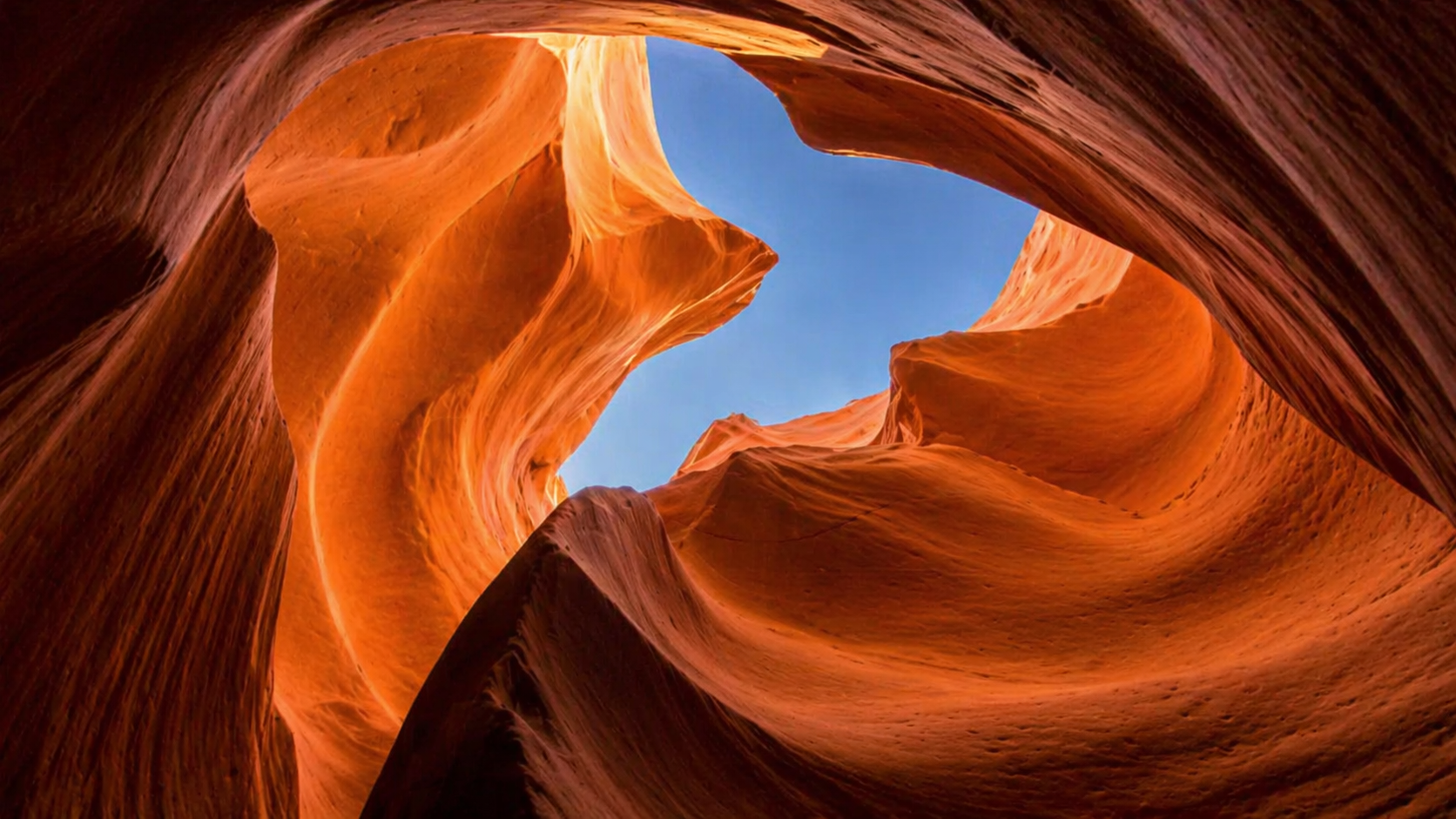
Inside the canyon, you walk on a flat sand floor between curved Navajo Sandstone walls, and on midday slots from about April to September sunlight can reach the floor in narrow beams. Guides on this listing are rated 4.4 out of 5, and many reviews say their guide set up their phone camera, showed them where to stand and took photos of each party. Neil, Irene, Brennan and Dana are among the guides reviewers name.
The overall score is lower than the guide score. The listing is rated 4.2 out of 5, and value for money scores 3.7. Many of the lower-rated reviews still describe the canyon as beautiful and focus on the logistics around the visit: how you reach the entrance, what you pay on the day and how long you wait.
The tour number matters here. Two Upper Antelope Canyon listings on GetYourGuide carry the same Prime Time name, and this one (product 417880) has three possible start points, depending on the option you book.
This page is based on the listing and its booking notes, the Navajo Parks fee page and recent traveler reviews, including the lower-rated ones. We have not taken this tour ourselves. There are four things to know before you book:
- The standard option starts with a walk to the canyon. Recent reviewers describe about a mile to a mile and a half each way through soft sand, and the shuttle costs $70 per person extra.
- The $95 price leaves out the Navajo fee. It comes to about $16 per person with tax, and reviewers paid it at check-in.
- Check-in is well before the tour time. Reviewers were asked to arrive 45 to 80 minutes early, and several left later than the time they had booked.
- Time in the slot is short. Reviewers estimate 30 to 40 minutes inside, moving in a steady line with other operators' groups.
The listing does mention the fee and the shuttle, but the shuttle appears in the description as "$70 at own expense" and in the itinerary as a 10-minute van ride, so it is easy to read as included. About two in three reviews still give five stars, and fewer than one in five is below four.
Walking to the canyon or paying for the shuttle
The listing says that after check-in you "head to the entrance of the canyon by a shuttle ($70 at own expense)". It also lists the tour as not suitable for people with mobility impairments or heart problems, or for pregnant women. Unless your confirmation names a shuttle option, plan on walking.
Reviewers from spring 2026 onward describe the walking version this way: you drive your own car a few minutes on a dirt road to a trailhead, then walk with your guide to the canyon and back. Their estimates for the round trip run from about 2.4 to 3 miles, at 30 to 50 minutes each way. The path is mostly soft sand with no shade, and the return is uphill. Some reviewers mention water stations along the trail, while one in May found them empty, so carry your own water.
The shuttle costs $70 per person, and several reviewers were told to pay in cash at check-in. People who started walking and could not manage the return were also charged for a ride back. One reviewer was told that the walking version is for ages 8 and up.
The walk suits fit adults on a cool morning or in spring and fall. It is much harder at midday in summer: one reviewer described a relative fainting in heat above 100°F. With the shuttle, the cost comes to about $181 per person ($95, the $16 fee and $70).
If you want the ride included, consider the Upper Antelope Canyon Entry Ticket and Guided Tour. It started from $115 per person when this site last checked prices in October 2026, plus the same Navajo fee, and is rated 4.5 from more than 3,000 reviews. Its listing describes about 10 minutes on a paved road and 10 minutes in the dry wash by vehicle. The other listing sold as Prime Time Entry & Navajo Guide (product 420158) meets at Tsé Bíghanílíní Tours, started from $95 at the same October check, and is rated 4.5 from almost 600 reviews; its lower-rated reviews do not describe a walk to the entrance. Our Upper Antelope Canyon tours comparison covers all six operators.
Five tips before you book
- Read the option name and start point in your confirmation. It tells you which of the three bases to drive to. A few reviewers went to the wrong office first.
- Bring cash for the shuttle if anyone in your group may not manage the walk. Reviewers were charged $70 per person, and some were told it was cash only.
- Ask for the Navajo fee payment link before you drive out. Reviewers were given a QR code at check-in to pay it, and mobile signal there can be weak.
- Set your watch to Arizona time and arrive at the check-in time, not the tour time. The listing runs on Arizona time, which has no daylight saving, and reviewers were asked to be there 45 to 80 minutes before the slot.
- Leave every bag in the car. The listing bans bags of any kind, including fanny packs and purses, so keep your keys and ID in a pocket.
How a prime-time visit runs
The listing gives a duration of 1.5 hours to 110 minutes and an itinerary of a 10-minute van ride and about an hour at the canyon, with the walking tour itself "approximate duration 75-minutes". Reviewers' days ran longer, mainly because of check-in. One reviewer booked for 1 p.m. left at 1:50 p.m.; another, booked for the same time, reached the canyon at about 3:30 p.m.
At the base you sign in, pay the Navajo fee and wait to be called. The meeting point depends on the option, and the address comes in your confirmation. Groups are capped at 10, and reviewers describe several small groups setting off together with their own guides.
After the canyon you leave by the one-way exit, a boardwalk with a long flight of steps, then return to the base the way you came. Reviewers describe two to three hours from check-in to the car park.
Inside Upper Antelope Canyon
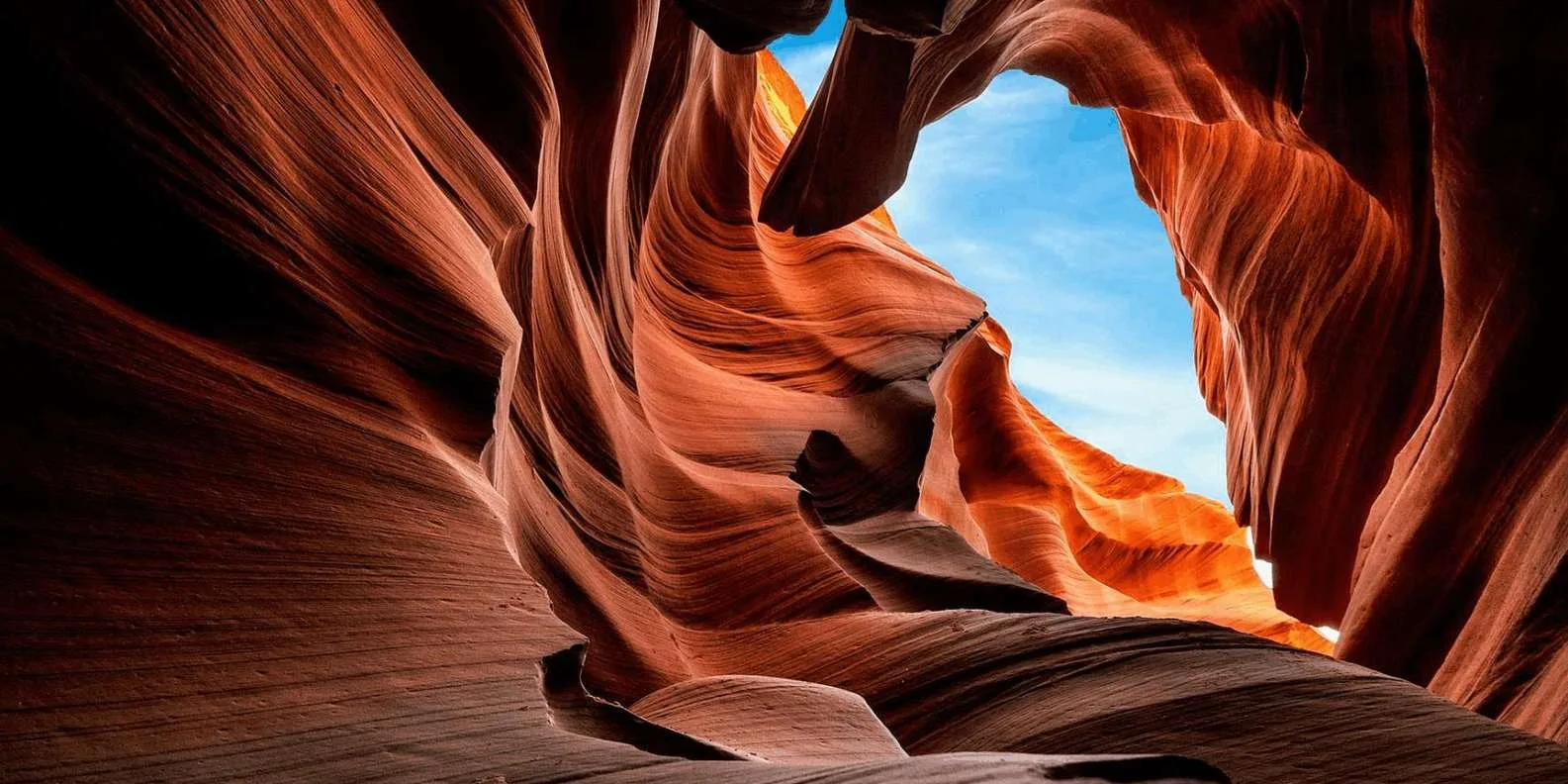
The slot itself is short and level, with no ladders. Guides point out formations, explain how flash floods carved the canyon and show you where to stand for photos. A couple of reviewers mention a guide playing the flute part way through.
Groups from every Upper operator use the same canyon, so you move in a line and step aside at photo spots in turn. Reviewers estimate 30 to 40 minutes inside. Guide quality varies: many reviews praise the guides by name, while a few describe a new guide with little to say about the canyon or the Navajo Nation, and some found a soft-spoken guide hard to hear at the back of the group.
Light depends on the slot you book and how late your group sets off. Midday is when beams can form, from about April to September on clear days. Some reviewers on 1 p.m. bookings reached the canyon late in the afternoon and found it too dark for the beams, while morning visitors mention fewer people and cooler air without strong beams. Our guide to the best time to visit goes through the months.
Other Page, Arizona tours
Many visitors combine the canyon with other sights around Page, Arizona, such as Lower Antelope Canyon, Horseshoe Bend and Lake Powell. Here are other tours that leave from the same area.
Other practical things to know
- Children 8 and under need a car seat or booster seat, and you bring your own.
- Pets and service animals are not permitted, and the tour is not wheelchair accessible.
- The listing does not allow tripods, selfie sticks, GoPros or other action cameras, umbrellas, or hiking sticks and canes.
- Closed shoes are required. Open-toed shoes, sandals and high heels are not allowed.
- Most reviews on this listing are dated March to October. For a visit between November and February, check the calendar for dates and read our winter guide.
Is the Upper Antelope Canyon Prime Time tour worth it?
Yes, for fit travelers who want the Upper canyon at one of the lower prices on GetYourGuide. For about $111 per person with the Navajo fee, you get entry to Upper Antelope Canyon and a Navajo guide who, by most accounts, will help with your photos.
If your group needs the ride, the total of about $181 per person may be harder to justify, and the Entry Ticket and Guided Tour includes it for less. Families with young children and anyone who struggles with heat or soft sand will probably find that listing a better fit. If you would like more time inside and can do without the light beams, our Upper vs Lower Antelope Canyon guide explains how Lower compares.
Whichever you book, bring water and a hat, since reviewers describe little shade outside the canyon.
How we put this together
We have not taken this tour. This page draws on the GetYourGuide listing and its booking notes, the entry fee published by Navajo Parks & Recreation, and the tour's traveler reviews across every star rating, with most weight on those from 2026. Ratings, prices and the review count were checked on 24 October 2026 and change often, so confirm them on the listing before you book. Some links on this page are affiliate links, and we may earn a commission if you book through them, at no extra cost to you.
FAQ
Common questions about the Prime Time tour
Is the shuttle to the canyon included in the $95 price?
Not on the standard option. The listing describes the shuttle to the canyon entrance as $70 per person at your own expense. Without it, you walk from a trailhead to the canyon and back.
How far is the walk to Upper Antelope Canyon on this tour?
The listing gives no distance. Recent reviewers describe about a mile to a mile and a half each way through soft sand, taking 30 to 50 minutes each way, with the return uphill and no shade.
Is the Navajo fee included?
No. The listing says the Navajo permit fee of $15 plus tax (about $16) per person is paid separately. Navajo Parks & Recreation sets the fee at $15 per person, per location, per day.
How long are you inside the canyon?
The itinerary allows about an hour at Upper Antelope Canyon. Reviewers estimate 30 to 40 minutes inside the slot itself, moving with groups from other operators.
Can children do this tour?
The listing says children 8 and under need a car seat or booster, which you bring yourself. One reviewer was told at check-in that the walking version is for ages 8 and up, so ask the operator before booking for younger children.
Will I see the light beams?
Only on a midday slot, roughly April to September, on a clear day. Some reviewers on 1 p.m. bookings reached the canyon late and found it too dark for the beams, so allow for the check-in time when you pick a slot.