Comparison Guide • 2026
Upper vs Lower Antelope Canyon: Which Tour Should You Book in 2026?
Upper has the light beams and a flat canyon floor, then a stair climb out. Lower costs less and gives you longer inside, down steep stairs and ladders. Here are the 2026 prices, rules and timings side by side.
The short answer
Book Upper Antelope Canyon if you want the famous midday light beams, which appear mainly from April through September, and a flat, ground-level walk through the canyon itself. Book Lower Antelope Canyon if you want more time inside, brighter color and a lower price (about $80.50 all-in), and you're fine with steep metal stairs and ladders. If you can't decide and you're visiting outside beam season, Lower is usually the better value.
Both canyons can only be visited with a Navajo guide. Tours at either one are canceled when storms threaten the watershed, most often in the July to September monsoon, even when the sky over Page is clear.
Some links on this page are affiliate links: if you book through them, we may earn a small commission at no extra cost to you. We only recommend tours run by Navajo-authorized operators.
Upper: the light beams
A flat sandy floor, about 30–40 minutes inside on a 90–100 minute tour, and the only canyon with the vertical shafts of light. The way out climbs stairs over the rock. About $100–$120 booked direct.
Lower: longer inside
Five flights of steel stairs and a run of ladders, 50–90 minutes inside depending on the operator, and walls that glow orange and pink through most of the day. $80.50 including the Navajo fee.
Or do both
The two canyons face each other across Highway 98 outside Page, so plenty of visitors pair them in one day: Upper at midday for the beams, Lower earlier or later.
Side By Side
Upper vs Lower Antelope Canyon at a glance
| Feature | Upper Antelope Canyon | Lower Antelope Canyon |
|---|---|---|
| Typical 2026 price (adult) | ~$100–$120 direct + processing fee/tax; resellers often $135–$180 | $80.50 all-inclusive (Ken's Tours and Dixie's) |
| Navajo entry fee | $15/person; check whether it's included | $15/person, bundled into the $80.50 price |
| Time actually inside | ~30–40 minutes (tour ~90–100 min total) | ~50–60 minutes (Ken's); up to 60–90 min (Dixie's) |
| Canyon length | ~660 ft (200 m) | ~1,335 ft (407 m) |
| Shape | A-shaped, ground level, flat sandy floor | V-shaped, below ground, narrow and twisting |
| Difficulty | Easy inside; moderate one-way exit with stairs and a ~200 ft climb | Moderate: five flights of stairs plus steel ladders |
| Light beams | Yes: midday, mainly April–September, sunny days | No reliable beams; glowing reflected light all day |
| Bags | Varies by operator; some allow clear bags only | No bags at all, even clear ones |
| Getting in | 4x4 truck shuttle from check-in | Short walk from check-in |
| Best for | Beam photos, claustrophobic visitors, flat walking | Value, color photos, active travelers, winter visits |
| Our pick on GetYourGuide | Upper Antelope Canyon Entry Ticket and Guided Tour, 4.5★ (3,043), from $115 | Lower Antelope Canyon Entry and Navajo Guided Tour, 4.7★ (9,705) |
Prices and rules last checked October 2026. Operators change both often, so recheck before booking. Our Antelope Canyon tickets & prices guide adds up the full cost, fees and tips included.
Round Out Your Trip
Other experiences you might enjoy
Whichever canyon you choose, the tour takes up only part of the day in Page, Arizona. The Horseshoe Bend overlook is about ten minutes from town and fits before or after either tour. Quieter Navajo slots such as Antelope Canyon X and Secret Antelope Canyon sit a short drive away, and on Lake Powell boat and kayak trips reach the flooded lower end of Antelope Canyon, past Glen Canyon Dam. If you're weighing the trip from further away, our guide on visiting Antelope Canyon from Las Vegas compares a day trip with a night in Page. Live availability for tours around Page is below.
Background
The same rock, shaped two different ways
Both canyons are slot canyons: narrow, deep channels worn into Navajo sandstone by flash floods and wind over millions of years. Both sit on Navajo Nation land just outside Page, across Highway 98 from each other, and both are guided-only. So the "which is better" question comes down to shape, time and cost.
- Upper Antelope Canyon is wide at the bottom and narrows toward the top. You walk in at ground level on flat sand, and because the opening is narrow and high above you, sunlight drops in as beams.
- Lower Antelope Canyon is the opposite: narrow at the bottom and open at the top. You go down into it on stairs and climb out on ladders, following a twisting, more enclosed route.
That one structural difference explains most of the rest: the beams, the difficulty, how bright the walls are and how the visit feels.
Upper Antelope Canyon
Upper Antelope Canyon: the canyon in the famous photos
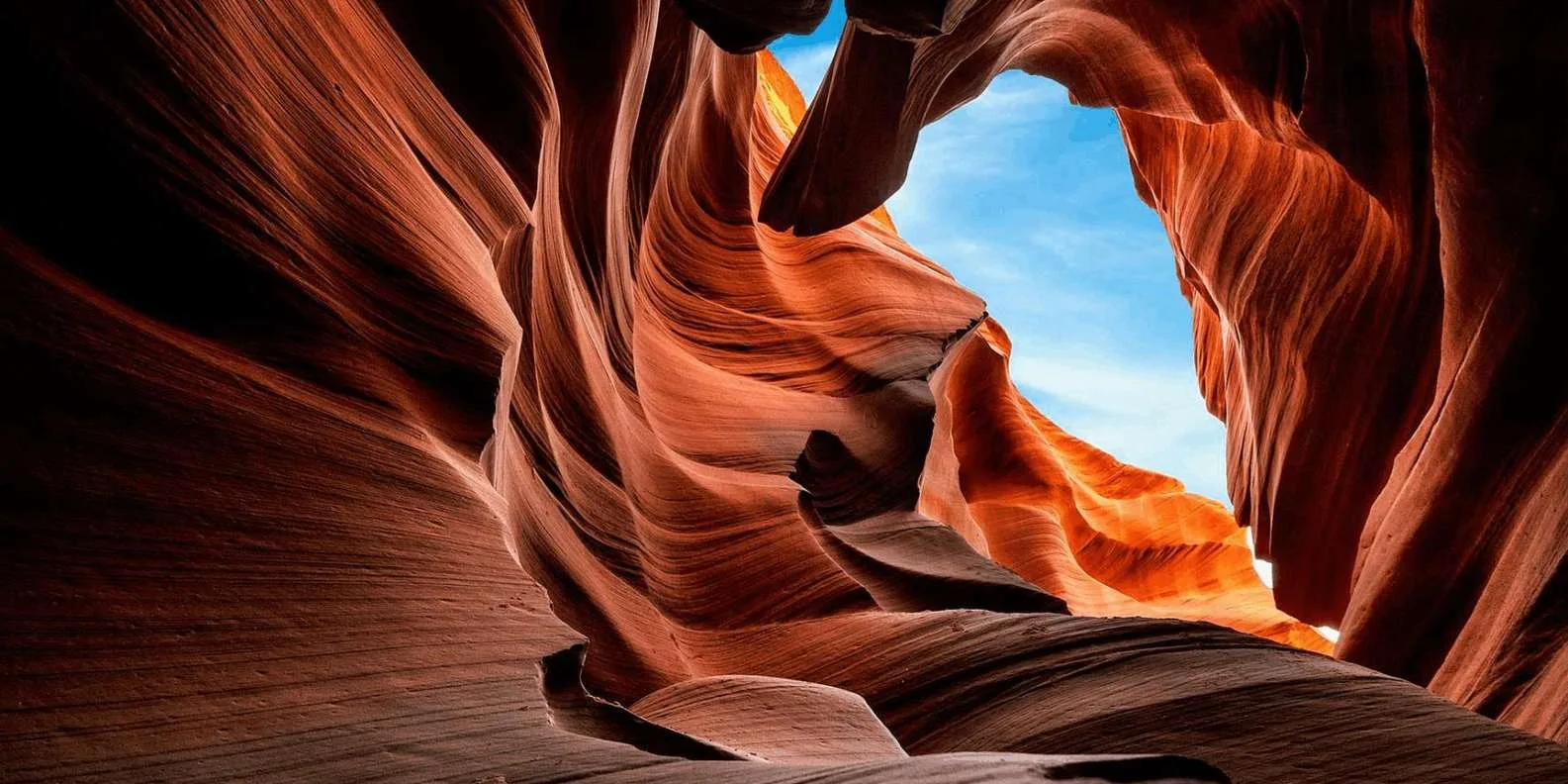
Upper Antelope Canyon, Tsé bighánílíní or "the place where water runs through rocks," is the canyon in most of the well-known photos and the most-visited slot canyon in the Southwest. It's shaped like an "A": wide at the sandy floor and narrow at the top. That narrow slit creates the light beams when the sun is high, and it's also why Upper feels darker and moodier than Lower.
How the tour works
You check in with your operator, then ride a 4x4 truck to the canyon mouth. Antelope Canyon Navajo Tours departs from the tribal park entrance about 3 miles east of Page on Highway 98, roughly a 15-minute ride each way. Antelope Canyon Tours (Ekis) leaves from downtown Page on Lake Powell Blvd, about 20 minutes each way, half of it on dirt. Your car stays at the office.
The exit: the 2026 reality check
Upper is no longer an out-and-back stroll. Tours now walk one way through the canyon and then exit up and over the rock. Antelope Canyon Tours describes a 200 ft elevation change at a 20-degree incline, with stairs and ramps that must be completed in about 20 minutes. Antelope Canyon Navajo Tours says visitors must descend 150 stairs to get back to the trucks. The canyon floor is easy; the exit is not.
Time inside
Antelope Canyon Tours says its tours run about 100 minutes and that "on average we spend 30 to 40 mins inside the canyon." Many travelers report feeling rushed, especially on the midday beam tours, which fill first.
2026 prices, booked direct
- Antelope Canyon Navajo Tours: $85 tour + $15 Navajo permit = $100, or $120 for the premium midday slot (processing fee and tax extra). Kids pay the adult price.
- Antelope Canyon Tours (Ekis): $92 adult base + $15 Navajo Park Fee + card/booking fees; the midday tour costs more.
- Adventurous Antelope Canyon Tours: around $120 for adults, ages 8+ only.
- Third-party "Prime Time" listings commonly run $135–$180, and some leave out the permit.
What Upper does well
- It's the only place to see the classic vertical light beams.
- The floor inside the canyon is flat, wide sand.
- It feels less confined, which helps if you're claustrophobic.
Where it falls short
- It's the more expensive canyon, and midday slots sell out first.
- You get the shortest time inside, about 30–40 minutes.
- It's crowded and fast-paced at peak times.
- The one-way exit climbs stairs on exposed rock.
Our pick on GetYourGuide: the Upper Antelope Canyon Entry Ticket and Guided Tour, 4.5★ from 3,043 reviews, from $115. Our Upper Antelope Canyon tours compared page sets all six Navajo operators side by side.
Lower Antelope Canyon
Lower Antelope Canyon: more canyon for less money
Lower Antelope Canyon, Hazdistazí or "spiral rock arches," nicknamed The Corkscrew, has the reverse shape: a "V" that's narrow at your feet and open to the sky. More light gets in, so the walls glow orange and pink through most of the day. Only two Navajo operators run it, Ken's Tours and Dixie's Lower Antelope Canyon Tours, and they sit side by side at the canyon.
How the tour works
There's no shuttle. You park at your operator, check in and walk a few minutes to the entrance. Then you go down five flights of steel stairs into the slot, wind through narrow passages and climb ladders back out. Ladders range from about 3 to 25 feet, and those over 8 feet have handrails. Dixie's lists the full route at 1.1 miles round trip. Our Lower Antelope Canyon guide covers the route in more detail.
Time inside
Ken's General Tour runs 50–60 minutes, and Dixie's says 60–90 minutes. Lower is about twice the length of Upper, so you get noticeably more canyon time for your money.
2026 prices
Ken's General Tour starts at $80.50 per person including taxes and fees, and Dixie's lists $80.50 all-inclusive for ages 4+, with infants 0–3 free. Older guides quoting $40–$60 for Lower are out of date.
Why people choose Lower
- It's the cheapest of the main sections, with the longer time inside.
- The light is brighter and more colorful, and easier to photograph.
- You get good results at almost any time of day, all year.
- It's usually easier to book than midday Upper slots.
What to weigh up
- Steep stairs and ladders make it a poor fit for bad knees or limited mobility.
- Some passages are narrow and single-file, which is hard if you're claustrophobic.
- There are no dependable light beams.
- The no-bag rule is strict.
Our pick on GetYourGuide: the Lower Antelope Canyon Entry and Navajo Guided Tour, 4.7★ from 9,705 reviews, the most-reviewed Antelope Canyon listing on GetYourGuide.
The Light Beams
Light beams: when and where
The vertical shafts of light belong to Upper Antelope Canyon. They need a high sun and a clear sky, so they appear mainly from April through September, with weaker beams possible from late March into early October. They're strongest from May through August, mostly between about 11:00 a.m. and 1:30 p.m. Arizona time. Cloudy days mean no beams, and from November to February the sun is too low.
Guides often toss sand into a beam to make it show up in photos, and the midday beam slots carry a premium price. Lower gets bright, glowing reflected light and rich color, but its shape doesn't produce the same vertical shafts. Our best time to visit Upper Antelope Canyon guide goes month by month.
"If the beam photo is what pulled you toward Antelope Canyon, Upper is your canyon."
Book a midday slot between May and August for the best oddsPhotography
Photography in each canyon
Upper: the classic shot
Built for the beam shot and wide, glowing "cathedral" compositions. If your goal is that specific, famous image, Upper is where you get it, during the midday beam window in peak season. With 30–40 minutes inside, set your camera up before the truck ride.
Lower: color and abstracts
Twisting, sculpted walls, tighter frames and brighter, layered color make for intimate, abstract compositions, and the longer visit gives you more time to compose. Many photographers prefer Lower's light for creative work, even without the beams.
Tripods, monopods and selfie sticks are banned on standard tours at both canyons, so shoot handheld. Antelope Canyon X still runs a tripod-friendly daytime photography tour (see the alternatives below), and our photography tours guide covers what's left. For settings, see our handheld photography tips for Upper Antelope Canyon.
Decision Guide
Which should you choose?
- Photographers chasing beams: Upper, on a midday slot between May and August. Book early. Tripods are banned, so shoot handheld.
- Photographers who want color and abstracts: Lower. It's brighter, and you get more time to compose.
- Families: Both work for school-age kids who can handle stairs. Upper's floor is easiest, but bring your own car seat for the truck (Antelope Canyon Navajo Tours requires one for kids 5 and under), and note that Adventurous Antelope Canyon Tours only takes ages 8+. Lower suits confident little climbers; toddlers must ride in a carrier.
- Budget travelers: Lower at $80.50 all-in is the clear winner. Antelope Canyon X costs less again (see below).
- Mobility limits: Neither canyon is wheelchair accessible, and many ticket listings ban canes, walkers and hiking sticks. Upper's floor is flat, but the stair exit is mandatory: Antelope Canyon Tours says everyone "has to be able to complete the hike (there are no exceptions)." If stairs are a hard no, consider skipping both.
- Claustrophobia: Upper. It's wider and taller, and you stay at ground level.
- Pregnant travelers: Policies vary. Adventurous Antelope Canyon Tours states no pregnant women are allowed, and many Lower listings say tours are not suitable during pregnancy. Ask your operator before you pay.
- Winter visitors: Lower. With no beams in Upper from November to February, Lower's price and longer visit make more sense.
- Fewer crowds: Lower, or an early or late Upper tour outside the midday rush.
- Time and energy for both: do both, with Upper at midday.
Rules
Rules to know before you go
Rules are set by Navajo Nation Parks & Recreation plus each operator, and they change. Read your confirmation email carefully; our rules and packing guide lists what to leave in the car.
- Bags: Dixie's does not allow bags, including transparent and clear bags, and Ken's applies the same rule. At Upper, Antelope Canyon Tours and Antelope Canyon Navajo Tours allow clear, transparent bags only, while some other Upper operators allow no bags at all. A phone, camera and water bottle are the safe setup.
- Tripods, monopods, selfie sticks: banned on standard tours at both canyons. Upper's dedicated photo tours ended by order of the Navajo Nation in December 2019, and Navajo Parks currently issues no photography or filming permits for Upper or Lower.
- Video and action cameras: many operators prohibit GoPros and camcorders.
- Pets and service animals: not allowed.
- Shoes: closed-toe shoes are required or strongly recommended.
- Check-in: Antelope Canyon Navajo Tours, Antelope Canyon Tours and Ken's want you there 30 minutes early, and Ken's gives unclaimed spots to walk-ins 10 minutes before departure. Dixie's and many reseller vouchers require 45 minutes. Late arrivals are generally not refunded.
- National Park passes: not accepted. This is tribal land, not a national park.
Tour Times
The time zone trap
Arizona doesn't observe daylight saving time, but the Navajo Nation does (March 8 to November 1 in 2026). Page and the canyons sit right on that line. Every Antelope Canyon operator schedules tours on Arizona time, the same as Phoenix. Ken's states it plainly: "Not Utah Time — Not Navajo Nation Time." In summer your phone may switch to Navajo or Utah time without telling you and show you an hour late, so set it manually to Phoenix time the night before.
Booking
Booking tips for 2026
- Book direct or through a trusted platform, and check what's included. The Navajo entry fee is $15 per person, per location, per day. Some operators bundle it (Dixie's, Antelope Canyon Navajo Tours), others add it at checkout (Antelope Canyon Tours), and some reseller listings make you pay it on site. Our tickets, prices and permits guide breaks this down.
- Midday Upper slots go first. Antelope Canyon Navajo Tours only releases dates 1–2 months ahead, so check back often, and book summer beam slots as soon as your dates are fixed.
- Walk-ins are a gamble. Antelope Canyon Navajo Tours says walk-ins are welcome, but in peak season you shouldn't count on a spot.
- Budget for tips: $3–$10 per person in cash for your Navajo guide is typical.
- Read the cancellation policy. Ken's refunds the ticket price (not the booking fee) for cancellations 72+ hours out, and fully refunds or reschedules weather cancellations.
- Compare operators in our Upper Antelope Canyon tours compared roundup.
Safety & Changes
Closures, flooding and 2025–2026 changes
- Flash floods: tours are canceled when storms threaten the watershed, most often during the July–September monsoon, even if it's sunny in Page. A canceled tour is the safety system working. On August 12, 1997, a flash flood in Lower Antelope Canyon killed 11 tourists. Very little rain fell at the site, but an earlier thunderstorm dumped water into the basin about 7 miles upstream. The Navajo Nation then closed the area to visitors for a year, and that tragedy is why guides are mandatory.
- Entry fee increase: the Navajo Nation fee rose from $8 to $15 per person. Navajo Nation Parks and Antelope Canyon Navajo Tours point to January 1, 2026, though some reseller listings said the change applied from April 2026. Either way, $15 is the current fee, and many reseller pages still show the old $8.
- Holiday closures: Lake Powell Navajo Tribal Park closes on Thanksgiving, the day after (Navajo Nation Family Day), Christmas and New Year's Day.
- Upper's one-way route: the stair-and-ramp exit is now permanent, so Upper is less accessible than older guides suggest.
Planning The Day
Doing both canyons in one day
Yes, you can do both in one day, and plenty of visitors do. The two canyons face each other across Highway 98, about 3 miles east of Page, and each tour takes well under two hours, so one in the morning and the other in the early afternoon is realistic, or one either side of a Horseshoe Bend stop. Book Upper's midday beam slot first and fit Lower in earlier or later, so you get the beams at their peak without a scheduling clash.
Watch two things. Lower's stairs and ladders on top of Upper's exit climb add up over a full day of touring, and both tours want you checked in 30 to 45 minutes early, so leave a gap between the two slots and reserve both before you travel.
Alternatives
Alternatives and combo tours
- Antelope Canyon X (Taadidiin Tours): two slot canyons on one 1.5-hour tour, from $47 for adults + $15 permit, with smaller groups and fewer crowds. Its 3-hour photography tour (about $142 + $15) still allows a tripod; it's the only section that still offers a dedicated tripod-friendly daytime photo tour.
- Secret Antelope Canyon + Horseshoe Bend: Navajo-run combos visit a quieter slot plus a private Horseshoe Bend overlook, from about $139 (ages 6+).
- Ken's Combination Tour: from $148, pairing Lower with additional canyon sections.
- DIY combo: book your canyon slot first, then visit Horseshoe Bend ($10 per vehicle parking, charged by the City of Page; national park passes don't get a discount) early or late in the day. Our Antelope Canyon and Horseshoe Bend in one day guide plans the timing, and if you're coming from Nevada, see Antelope Canyon from Las Vegas.
Staying overnight in Page makes an early or midday slot far less stressful than driving in the same morning.
FAQ
Upper vs Lower questions people ask before booking
What's the main difference between Upper and Lower Antelope Canyon?
Upper is A-shaped, wide at the floor and narrow at the top, with a flat, ground-level walk, and it's where the vertical light beams appear. Lower is V-shaped and below ground, with steel stairs, ladders and a longer, twisting route. Both can only be visited with a Navajo guide.
Is Upper or Lower Antelope Canyon better?
Neither is objectively better. Upper wins for light beams and flat walking; Lower wins for value, time inside and color. In winter, Lower is usually the smarter pick. See our "is Upper worth it" breakdown if you're still deciding.
How much does Antelope Canyon cost in 2026?
Lower is $80.50 all-in with Ken's or Dixie's. Upper is about $100–$120 booked direct plus fees and tax, and more for midday or reseller slots. The Navajo entry fee is $15 per person, so confirm whether your price includes it. Prices change, so recheck before booking; our tickets and prices guide has the full breakdown.
How long are you actually inside each canyon?
Upper: about 30–40 minutes of a 90–100 minute tour. Lower: about 50–60 minutes with Ken's, and up to 60–90 minutes with Dixie's.
Does Lower Antelope Canyon have light beams?
Not reliably. Its V shape lets in diffuse light, so it glows brightly but rarely shows the distinct beams Upper is known for.
Is Lower Antelope Canyon hard to walk?
It's not a technical hike, but you go down five flights of steel stairs, wind through narrow passages and climb ladders of up to about 25 feet to get out. Upper's floor is flat, but its exit climbs stairs too, so neither canyon suits limited mobility.
Can I visit Antelope Canyon without a tour?
No. Navajo Nation Parks & Recreation requires a licensed Navajo guide at every Antelope Canyon location. Our guide to whether you need a tour explains why.
Can I bring a backpack or tripod?
No tripods at either canyon on standard tours. Lower bans all bags, including clear ones; some Upper operators allow clear bags only. Check your operator's list.
Which canyon is better for photography?
Upper is best for the classic beam and cathedral shots; Lower is brighter and gives you longer to compose intimate, abstract frames. Both are handheld only on standard tours.
What time zone are Antelope Canyon tours on?
Arizona time (MST, no daylight saving), the same as Page and Phoenix. Not Navajo Nation or Utah time.
Can I visit both canyons in one day?
Yes. The two canyons face each other across Highway 98 outside Page, so many visitors do both. Book Upper's midday slot first, fit Lower in earlier or later, and reserve both before you travel.
Is Antelope Canyon worth it if it's cloudy or winter?
Yes. The sandstone still glows, crowds thin out, and Lower is a great choice. You'll just miss Upper's beams.
The Bottom Line
Book the canyon that fits your trip
If the light-beam photo is your dream shot and you're visiting between April and September, book a midday Upper Antelope Canyon slot as early as you can, and be ready for a quick pace and a stair-climb exit. For everyone else, especially budget travelers, winter visitors and people who want to linger, Lower Antelope Canyon gives you more canyon for less money. Whichever you choose, book with a Navajo-authorized operator, confirm whether the $15 fee is included, and set your watch to Arizona time.
Check Upper Antelope Canyon dates & prices
Check Lower Antelope Canyon dates & prices
Free cancellation on most options up to 24 hours before departure · Secure checkout via GetYourGuide